misfiled as "Keet, Electric" @ElectricKeet@awoo.space
- shortname
- Keet
- pronouns
- they/them
- species
- some kind of pony thing?
I 💖 @orrery
I 🕹️ retrogaming
I 🔊 chiptunes
I 🦄 ponies
I ☁️ cannabis
I � Unicode
and yes to 🤖 but #nobot
avatar art by Dana Simpson (danasimpson.com)
Joined Apr 2017
misfiled as "Keet, Electric"
boosted
Good morning, field creaturea and forest creatures! Today, may your combined gender and ungender burst cages and upset nearby physics experiments
misfiled as "Keet, Electric"
boosted
https://docs.google.com/forms/d/e/1FAIpQLScJbspAzVsBCtw_-nIc86jCES1fdMMorUoW7CRuV6_LSE5brg/viewform
Undergrad thesis project on #gender-neutral #pronouns is looking for NON-ENGLISH survey responses
misfiled as "Keet, Electric"
boosted

So I must once again ask, is there anyone in the Seattle metro area who would like to pay very little money for my very expensive couch? Who is able to provide their own transport for it, of course. Even if that means, like, renting a U-Haul or paying someone to move it for them.
It's a fancy expensive couch and I don't want a lot for it. Heck, I'd be happy to give it away to someone who can't afford it.
misfiled as "Keet, Electric"
boosted

Identity euphoria is a lovely feeling
Any other nerdles about? (24 square emoji)
I get a lot of 4-guess games, but my super-secret opening guesses have paid off! (Lemme know if you want me to share those.)
nerdlegame 58 3/6
⬛⬛⬛🟪⬛⬛🟪🟪
⬛🟪🟪🟪⬛🟩⬛⬛
🟩🟩🟩🟩🟩🟩🟩🟩
misfiled as "Keet, Electric"
boosted

tired: From Software
wired: Softwhence
misfiled as "Keet, Electric"
boosted
it's lawful evil, not lawful steve'll
misfiled as "Keet, Electric"
boosted
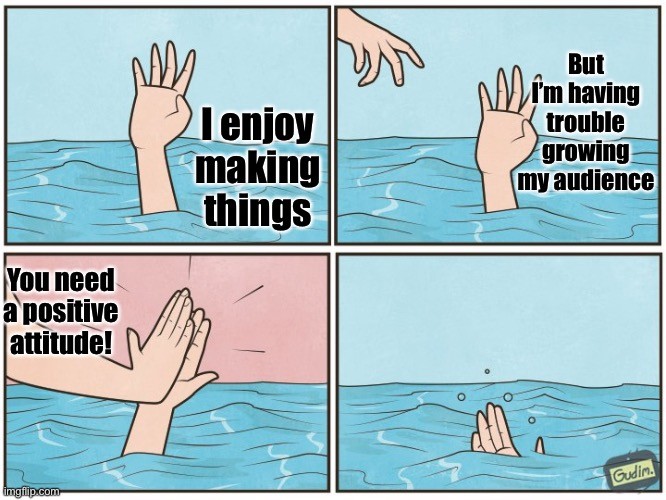
I would absolutely do work for my friends and community that I would not do for my job.
That's why jobs insist on being your friends and community too.
misfiled as "Keet, Electric"
boosted

misfiled as "Keet, Electric"
boosted

misfiled as "Keet, Electric"
boosted
You are not inherently more capable for being sighted, hearing, physically mobile, or verbal.
Your access needs are likelier to be met by the dominant society. That is all.
misfiled as "Keet, Electric"
boosted
rumination on ableist language (by a sighted person)
It's so backward that "blindness" is used as a shorthand metaphor for being careless, ignorant, or oblivious when in fact many blind people I know are trained to be careful and pay attention to small details for their own safety. If anything, it's sighted people who are likelier to blunder carelessly by being overconfident in our vision and letting our preconceptions get in the way of good sense. So shouldn't ableist language targeting blindness be the other way around, like "stumbling sightedly" or "turning an oblivious, sighted eye?"
But that's unfair, sighted people might say. There's a wide range of carefulness or carelessness within any group, and it's prejudicial to chalk up obliviousness, ignorance, or indeed immorality to any whole group based on ability!
Yes, that would be unfair and imprecise, wouldn't it?
My point exactly.
misfiled as "Keet, Electric"
boosted

please start adding fatphobia to the list of oppressions you’re against ty ty 🙏
misfiled as "Keet, Electric"
boosted
leading a horse to ideas, but.
misfiled as "Keet, Electric"
boosted

Das Kapital, also known as "I'll fucking tell you who moved the cheese" by Karl Marx
misfiled as "Keet, Electric"
boosted

Hot Pockets come in boxes of 2 because you're allowed to have one backup copy for personal use only
Turns out to be way too easy to post to the wrong account in Subway Tooter.
misfiled as "Keet, Electric"
boosted


Smithsonian Announces Landmark Decision to Repatriate Benin Bronzes
A year ago, Smithsonian Secretary Lonnie G. Bunch III — who in 2019 became the first Black individual to head the institution — called upon the museum’s collections staff to form the Ethical Returns Working Group to make recommendations on collections policy that extended beyond legal title to ethical ownership. The new guidelines, which apply to all of the Smithsonian’s constituent institutions, take into account the objects’ communities of origin and the means of acquisition.
misfiled as "Keet, Electric"
boosted

*ahem*
if you can see the nest it came from, put it back
if it's safe for you to do so, put it back
if it's a baby bird you found
lying helpless on the ground
the best thing that you can do is PUT IT BACK!!


- shortname
- Keet
- pronouns
- they/them
- species
- some kind of pony thing?
I 💖 @orrery
I 🕹️ retrogaming
I 🔊 chiptunes
I 🦄 ponies
I ☁️ cannabis
I � Unicode
and yes to 🤖 but #nobot
avatar art by Dana Simpson (danasimpson.com)
Joined Apr 2017