
Do you have trouble visualizing sizes when doing digital design work or buying things online?
I sure do.
Best solution I've found is also hilariously simple: I keep a retractable tailor's tape within arm's reach of my desk, and whip it out for reference whenever I'm unsure (i.e. almost every time).


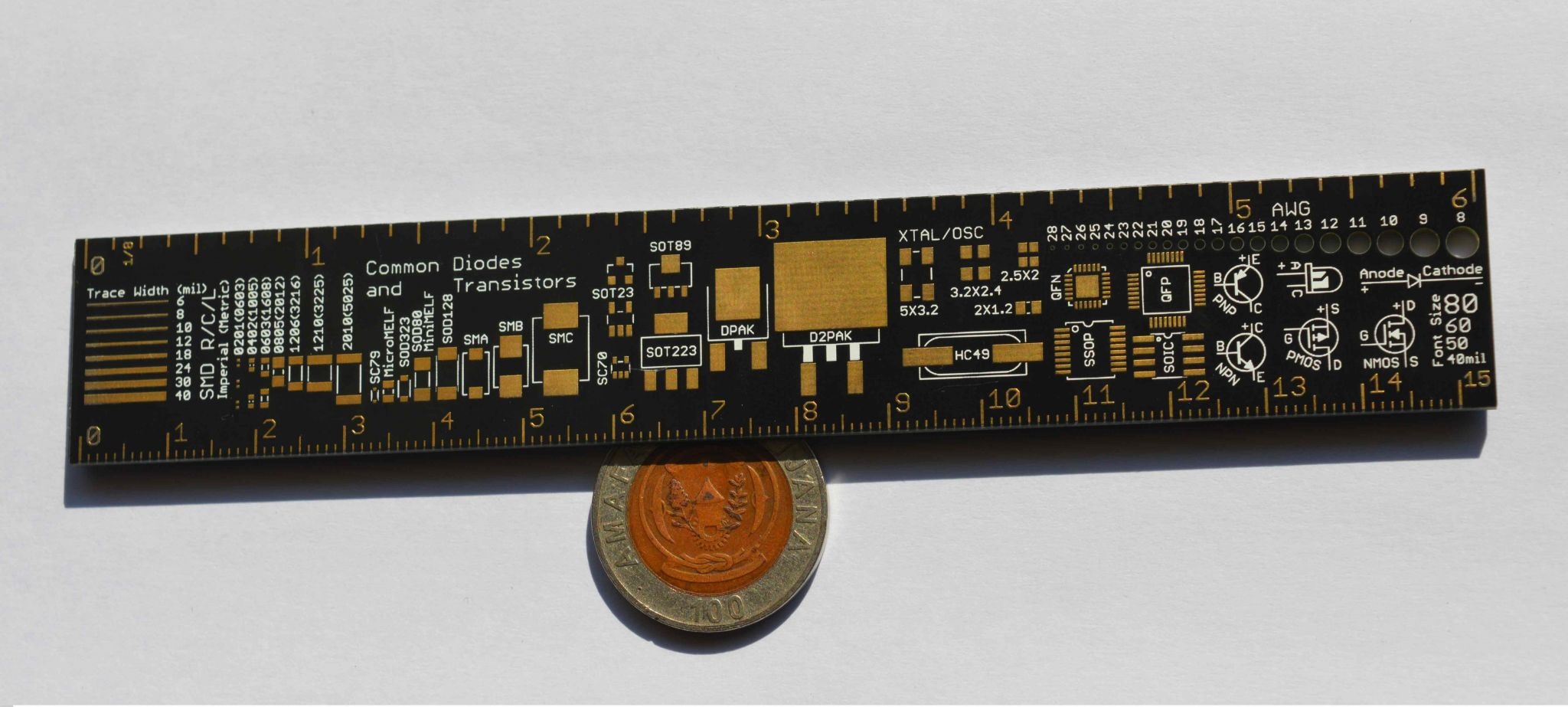
@starkatt This is such a common problem for electrical engineers that you can get these little pcb rulers with actual component footprints on them so you can see what they look like and how they compare to each other
they usually also have other useful stuff on them like trace widths and stuff, too
-F/R
@Felthry I love that ruler, have one myself.
@Felthry 'cause yeah there's no inherent size reference when looking at a PCB layout!
@Felthry ...looking at the picture I'm like "owo coin for scale isn't so useful when it's not a known coin", then realized wait, ruler for scale.
@starkatt it seems like the ruler is the thing being shown here as the coin is partly obscured; this was a random search result so it's possible the coin is common to the clientele of the site this came from
-F
@Felthry I figure it is, yeah. Mostly noting that coins aren't a great scale reference.
(my go-to for that size range is an AA battery.)

@noiob @starkatt the smaller coins are so worthless that a lot of people want to get rid of them entirely (canada already did get rid of their 1¢ coins and it seems to have gone fine for them, so i don't see why we haven't other than that it's not a high priority)
the main reason we have a law against defacing currency, as we understand it, is that the metal content of both the 1¢ and 5¢ coins is worth more than the face value of the coin
-F
@Felthry @starkatt according to Wikipedia, burning money is mainly a form of protest. The laws also prohibit stuff like stamping advertising onto bills https://en.wikipedia.org/wiki/Money_burning

@noiob @starkatt yes, we have 1¢, 5¢, 10¢, and 25¢ pieces that are common, and rarer 50¢ and $1 coins too
-F